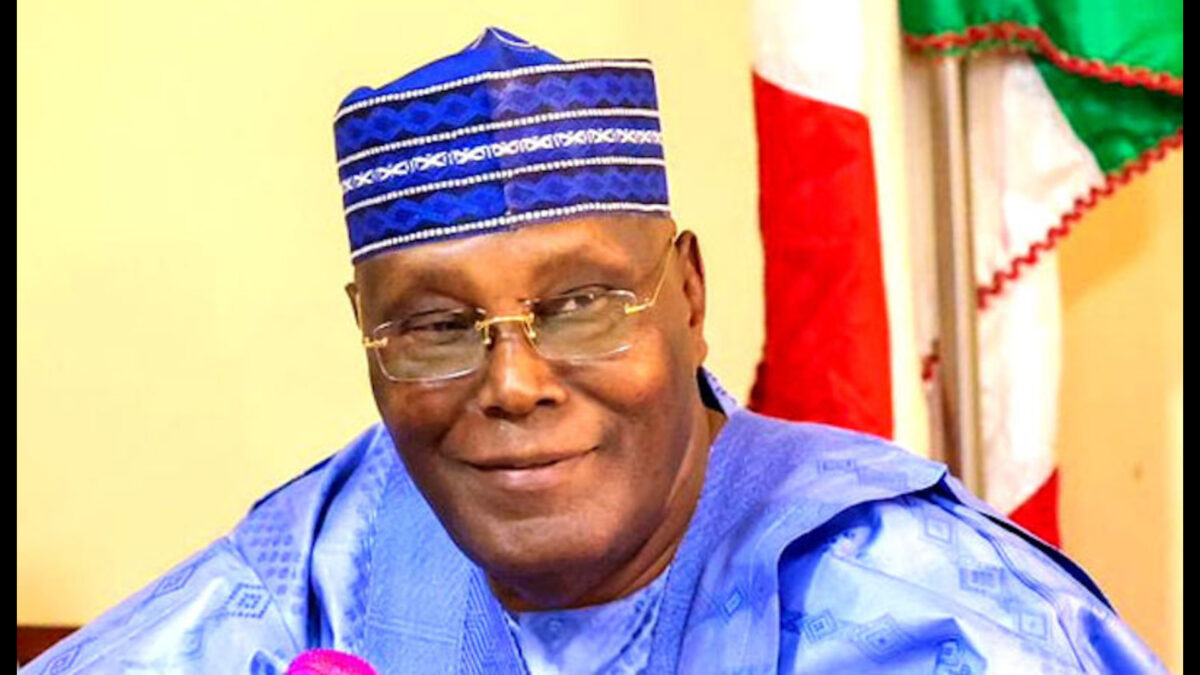
MEET YOUR CANDIDATES 2027 — Profile #2. Atiku Abubakar, who turns 80 on 25 November 2026, is the African Democratic Congress (ADC) candidate in the presidential election of Saturday, 16 January 2027, with former Rivers State governor Rotimi Amaechi as his running mate. It is his seventh attempt at the office — and the first shadowed by a court judgment: on 5 November 2026, a Federal High Court in Abuja nullified the ADC leadership and the primary that produced him. The party has appealed, and INEC's published list still carries his name.
Atiku was born in Jada, in today's Adamawa State, the only child of a Fulani trader and farmer. He took a law diploma at Ahmadu Bello University's Institute of Administration in 1969, joined the Nigeria Customs Service the same year, and retired 20 years later as a Deputy Director. While still an officer at Apapa port, he co-founded a logistics business with Italian businessman Gabriele Volpi; it became Intels, one of Nigeria's biggest oil-and-gas logistics firms, and he later sold his stake. His best-known private project is the American University of Nigeria in Yola, licensed in 2003 and opened to its first students in 2005. Asked about his wealth, he has said it came from "wise investments, hard work and sheer luck."
His runs at the presidency map Nigeria's Fourth Republic. He placed third in the first ballot of the SDP presidential primary at Jos in 1993 (Abiola 3,617 votes; Kingibe 3,225; Atiku 2,066), then stepped down for Abiola. He helped found the PDP, and won the Adamawa governorship in January 1999 — which he gave up to become Olusegun Obasanjo's running mate. As Vice President (1999–2007) he chaired the National Economic Council and the privatisation council; the partnership collapsed over Obasanjo's third-term ambition, which he opposed and the Senate threw out in May 2006. He ran in 2007 for the Action Congress: INEC struck his name off the ballot list, the Supreme Court restored him days before the vote, and he finished third. He lost the PDP primary of 2011 to Goodluck Jonathan (2,736 votes to 805), came third in the APC primary of 2014 and campaigned for Muhammadu Buhari's 2015 victory, then won the PDP ticket in 2018 and lost the 2019 election to Buhari — 15.19 million votes to 11.26 million — with the courts dismissing his petitions. He won the PDP ticket again in 2022 and finished second in 2023 behind Bola Tinubu (8.79 million to 6.98 million). In July 2025 he resigned from the PDP, citing "irreconcilable differences," joined the coalition that adopted the ADC, won its primary in May 2026 — the returning officer announced 1,846,370 votes against 504,117 for Amaechi and 177,120 for Mohammed Hayatu-Deen, a result both runners-up rejected, alleging irregularities — and appears with Amaechi on INEC's published final list.
Atiku's record: the privatisation programme and a university
The centre of his record is privatisation. Under the 1999 privatisation law the Vice President chairs the National Council on Privatisation, and the Bureau of Public Enterprises ran the sales of federal stakes in state companies. His supporters credit the Obasanjo–Atiku years with the GSM rollout and the 2005 Paris Club deal that cancelled most of Nigeria's foreign debt; strictly, those were administration outcomes — the licences came from the telecoms regulator, the debt deal from the finance ministry — delivered while Atiku chaired the economic council through which the programme ran. His own summary, repeated by his 2027 campaign: the state companies "consumed billions yearly with zero output," the sales stopped the bleeding, and he has never been convicted by any court, in Nigeria or abroad. The sales remain disputed (see below).
What Atiku is promising for 2027 — in his own claims
Everything in this section is the candidate's claim, not a verified outcome. In his acceptance speech in Abuja on 27 May 2026, Atiku named five priorities — security, education, the economy, healthcare and power-sharing among Nigeria's constituent units — and promised massive recruitment into the security services, free and compulsory primary and secondary education, and an economy that restores investor confidence and creates jobs. At his campaign flag-off in Sokoto on 4 November 2026 he added three concrete pledges: restore the fuel subsidy, which his campaign describes as a targeted subsidy tied to fuel refined inside Nigeria; reopen the land borders for legitimate business; and end insecurity so farmers return to their farms — "We will restore subsidy back into our fuel and do everything humanly possible to bring an end to insecurity so as to ensure our people can go back to their farms." He also promised to make Hajj and Christian pilgrimages affordable.
The other side: PTDF, the American files and a ticket in court
PTDF (2006). The Petroleum Technology Development Fund, an oil-industry training fund under the Vice President's office, became the weapon of the Obasanjo–Atiku war. An EFCC report of August 2006 alleged that Atiku approved the placement of $125 million of the fund's money in banks — $10 million in Trans International Bank and $115 million in Equitorial Trust Bank. The $125 million itself had been approved for fund projects by President Obasanjo and the Federal Executive Council on 25 April 2003; only a further $20 million was approved without reference to the cabinet. The EFCC further alleged that the bank lent over ₦1.5 billion to companies linked to Atiku's associate Otunba Fasawe, and that Atiku benefited by ₦61 million. A federal panel found abuse of office, and in September 2006 the Code of Conduct Tribunal filed an 18-count charge. The case was never tried: the courts held that a sitting Vice President's immunity barred the proceedings, a Senate committee called the $20 million approval illegal while finding no direct evidence that he personally enriched himself, and other courts set the EFCC and panel reports aside. His side: persecution for blocking the third term — he counter-alleged that ₦10 billion was taken for the third-term project itself, and his camp noted the government had remitted only $145 million of $700 million in oil bonuses due to the fund.
The American files. In 2005 the FBI recorded US Congressman William Jefferson telling a wired investor he would need $500,000 "as a motivating factor" for Atiku in a Nigerian telecoms deal; $100,000 in sting cash changed hands — $90,000 of it later found in Jefferson's freezer — and agents searched the Maryland home of Atiku's then-wife, Jennifer Douglas. Jefferson was convicted in 2009 — though no part of the $500,000 was ever paid, and the jury acquitted him of the foreign-bribery count tied to the freezer money. In February 2010 a US Senate subcommittee reported that Douglas "helped her husband bring over $40 million in suspect funds into the United States" between 2000 and 2008 — about $25 million into more than 30 US accounts, about $14 million to American University in Washington as consulting payments for building his Yola university — and noted a US Securities and Exchange Commission complaint alleging she received over $2 million in Siemens bribe payments. In September 2026, a Paris arbitration tribunal ruling on the Mambilla power dispute recorded a $500,000 payment made in January 2003 by the project's promoter to an account belonging to Douglas, treating it as a suspected payment connected to the contract award. Premium Times also reported that the EFCC had set up a team to investigate Atiku and others named in the ruling; the newspaper's requests for comment ahead of its 23 September investigation went unanswered. His side: neither Atiku nor Douglas was ever charged in any of these matters. On Mambilla, campaign spokesman Phrank Shaibu responded on 19 September 2026 that the tribunal did not indict Atiku, that he was not a party to the arbitration, that he did not influence or award the contract and that he sat on neither the technical nor the procurement panel; his media adviser Paul Ibe argued the same case in an op-ed, "Mambilla: APC's Claims Long on Propaganda, Short on Evidence." Premium Times' own summary, on 28 September, was that Atiku "has denied being indicted by the tribunal and said he was not responsible for awarding the contract, but failed to address other concerns raised in the verdict." He says Jefferson approached him and was referred to the communications minister, that he rejected the approach and was never called as a witness, and that the transfers were his legitimate earnings — "I was not indicted in that report" — much of them funding his university.
The privatisation sales. A Senate committee reviewing the programme in 2011 heard that 122 state companies were sold between 1999 and 2011 for ₦146.4 billion, and criticised how the sales were valued and conducted. The emblematic failure is NITEL: sold to Transcorp in 2006 on a $750 million bid, the sale was revoked by the government in 2009 over breached conditions and debt, and the national carrier never recovered. His side: the sales were run by the Bureau of Public Enterprises under a statutory council, the enterprises were loss-making drains on the treasury, and no court has convicted him over a single sale.
Five parties, six runs. Atiku has stood under the SDP, PDP, Action Congress, APC and ADC banners, leaving the PDP three separate times; critics count the moves against him (below). Inside his own camp, the decision most often cited is 2022: he chose Ifeanyi Okowa as running mate over Nyesom Wike, whom a party committee had recommended, and five PDP governors refused to campaign for him. His side: his message — economic liberalisation and restructuring — has been consistent in every party, and his 2025 resignation letter blamed the PDP's departure from its founding principles, not the other way round.
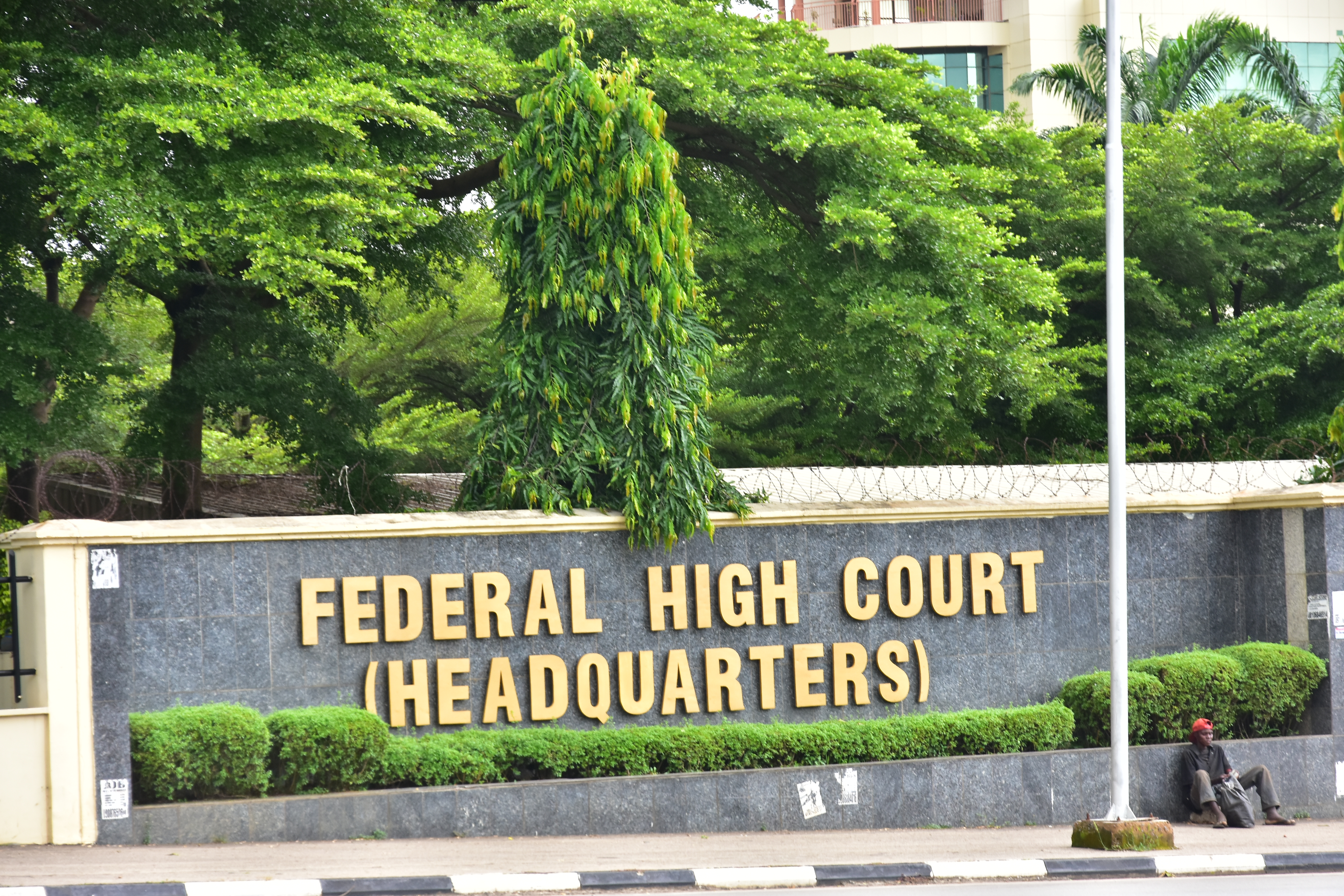
The ticket in court. On Thursday 5 November 2026 — the day after his Sokoto flag-off — Justice Peter Odo Lifu of the Federal High Court, Abuja, ruled in a suit brought by Nafiu Bala Gombe, a former ADC deputy national chairman who claims the party chairmanship. The court held that the ADC's caretaker leadership under former Senate President David Mark was unlawfully constituted, nullified the decisions taken under it — including the primary that produced Atiku — and directed INEC not to recognise them. The judgment concerns the party's leadership and process; it is not a ruling on Atiku personally. The ADC has appealed and applied for a stay of execution. INEC, through National Commissioner Mohammed Kudu Haruna, says it had not received the certified true copy of the judgment and had not deliberated on it, and the ADC's lawyers are demanding the document's release. As this profile is published, Atiku's name remains on INEC's list of candidates for the 16 January election, and his candidacy is under active legal challenge with an appeal pending. His side: campaign spokesman Phrank Shaibu argued the ruling conflicts with a July 2026 Federal High Court judgment recognising the Mark leadership, noted that INEC itself recognised that leadership and supervised the primary, and said "the legal process must be allowed to run its course."
Supporters say: ADC chairman David Mark, at the Sokoto flag-off, expressed confidence in the Atiku–Amaechi ticket, saying their combined experience and leadership capacity would address the country's numerous challenges (BusinessDay). His campaign's closing line everywhere: two terms as Vice President, an economic programme that opened the economy — and in nearly fifty years in public life and business, no conviction anywhere.
Critics say: the APC's publicity secretary Felix Morka published a statement titled "2027: Why Nigerians Must Keep Atiku Away From The National Treasury," chaining the PTDF, Mambilla, Siemens, Jefferson and Senate-report files. Former minister Dayo Adeyeye, in an interview reported by Punch on 26 October 2026, attacked Atiku's record of switching parties and said he lives in Dubai, returns only when election time comes, loses and runs back — in substance, the charge that he would be a tourist president. Nyesom Wike, now backing Tinubu, has promised to "keep Atiku under pressure" through the campaign. His age is part of the argument too: he would take office at 80.
What happens next: three clocks run on this candidacy. The courts: pre-election appeals move on tight constitutional timelines, and the ADC's appeal and stay application will decide whether the 5 November judgment stands between Atiku and the ballot. INEC: the commission has changed nothing so far and awaits the judgment's certified copy. The campaign: the ADC opened its northern tour in Sokoto on 4 November and intends to keep campaigning as if the ticket is secure. Election day is Saturday, 16 January 2027. This living profile will be updated as the appeal is decided.
Source: Premium Times, BBC News Pidgin, BusinessDay, INEC, US Senate Permanent Subcommittee on Investigations (2010). Follow @newstweetnaija on Instagram for the day's biggest stories.